- Follow Us:
- (336) 855-5596
- [email protected]

How a Comfortable Environment Improves the Patient Experience
August 31, 2026
Why Resident and Family Feedback Matters in Long-Term Care
October 15, 2026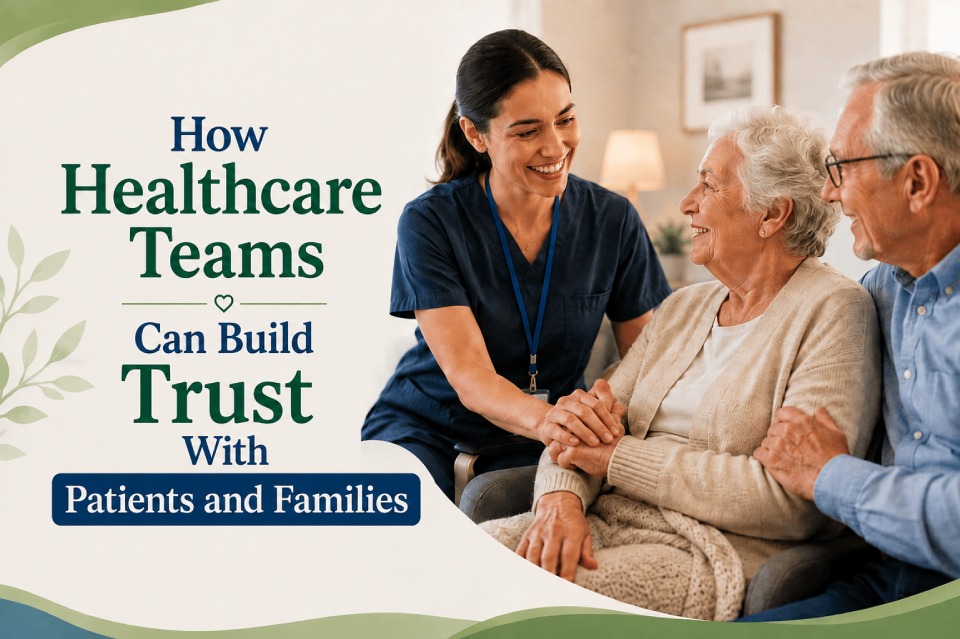
Trust is built in small, everyday moments: a clear explanation, a question answered honestly, a promise kept.
Trust is one of the most important parts of any healthcare relationship. When a patient enters a skilled nursing or rehabilitation facility, they are often experiencing a period of significant change. They may be recovering from surgery, adjusting after a hospitalization, managing a chronic health condition, or temporarily relying on others for activities they once handled independently. Families may be experiencing their own uncertainty as they try to understand what their loved one needs and what comes next.
During these moments, clinical expertise matters tremendously, but so does the way care is delivered. Patients and families want to know that questions will be answered, concerns will be taken seriously, and the people providing care see the individual, not simply a diagnosis or room number.
Building trust does not happen through one conversation. It develops through clear communication, compassionate interactions, consistency, and reliable support over time. For North Carolina skilled nursing facilities, creating this foundation of trust can have a meaningful influence on the overall patient experience in healthcare.
Jump To Section
Communication
Clear and Honest Communication Creates a Strong Foundation
Good communication is one of the simplest and most powerful ways healthcare teams can establish trust. Patients and families naturally have questions, and those questions deserve real answers.
What is the current care plan? Families want to understand the day to day approach guiding their loved one’s care
How is rehabilitation progressing? Knowing where recovery stands helps everyone plan with confidence
Why has medication changed? Explaining the reasoning behind an adjustment turns a surprise into an informed decision
What needs to happen before returning home? A clear picture of the milestones ahead makes discharge feel manageable
Healthcare professionals may discuss these subjects every day, but they are often completely new to the patient and family. Explaining information in straightforward, understandable language can make an unfamiliar situation feel much less intimidating.
Recovery does not always follow a perfectly predictable timeline, and healthcare teams may not immediately have an answer to every question. Acknowledging uncertainty and explaining what will happen next can build more confidence than offering unrealistic reassurance.
Patients should also have opportunities to ask follow-up questions. Communication is most effective when it becomes a conversation rather than simply information being delivered.
Compassion
Compassionate, Respectful Care Makes Communication Personal
People tend to remember how they were treated, particularly during vulnerable moments. Small acts of courtesy carry real weight in a skilled nursing setting.
Introducing yourself before beginning any interaction
Explaining what you are doing before providing care
Knocking before entering a resident’s room
Asking about a resident’s preferences rather than assuming them
Compassion also means recognizing that two patients experiencing similar medical conditions may respond very differently. One person may be eager to begin therapy, while another feels frightened or discouraged. One resident may enjoy social interaction, while another values quiet time. Taking these individual preferences seriously can help residents feel more comfortable and understood.
This personalized approach is particularly important for someone entering nursing home respite care. A short-term respite resident may be unfamiliar with the environment, staff, and routines. A warm introduction and clear explanation of what to expect can help make that temporary transition feel more welcoming.
Family Involvement
Consistent Updates Help Families Feel Involved
Family members often play an important role in a patient’s healthcare journey. They may be helping make decisions, preparing the home for discharge, arranging follow-up appointments, or simply providing emotional encouragement. When families do not know what is happening, uncertainty can quickly turn into worry.
Consistent communication can help prevent that disconnect. Families should understand whom they can contact with questions and how they will receive important updates, while respecting the resident’s privacy and applicable healthcare regulations.
Care planning meetings can be particularly valuable. They give patients, families, nurses, therapists, social workers, and other members of the care team an opportunity to discuss goals, progress, concerns, and next steps.
Updates do not need to be lengthy to be meaningful. Sometimes knowing that a loved one participated well in therapy, reached a new mobility goal, or had a concern addressed can provide valuable reassurance.
Among nursing homes in North Carolina, strong family communication can be an important part of creating a more positive care experience.
Listening
Listening to Patient Concerns Builds Trust
Communication is not only about explaining care. It is also about listening. Patients know their own bodies, routines, preferences, and experiences. Family members may also notice subtle changes because they know their loved one so well.
When a patient says something feels different, or a family member raises a concern, listening carefully shows that their observations matter. Active listening often looks like this in practice:
Asking additional questions so the full picture comes through rather than a partial one
Repeating important information back to confirm that everyone understands it the same way
Explaining the next steps so a concern raised today has a visible path forward
Discussing alternatives when a request cannot be accommodated exactly as asked, because explaining why demonstrates respect
It is also important to create an environment where residents feel comfortable speaking up. Patients should never feel that asking a question or expressing a concern makes them difficult.
Feeling heard is an important part of the patient experience in healthcare, and it can influence how confident patients and families feel about the care team.
Follow Through
Reliable Support Turns Words Into Trust
Trust ultimately depends on what happens after a conversation ends.
If a staff member tells a resident they will return with information, following through matters
If a family raises a concern, communicating what was done about it matters
If the care team establishes a rehabilitation goal, providing consistent support toward that goal matters
Reliability helps patients understand what they can expect. Consistency is particularly reassuring in skilled nursing settings, where residents may interact with nurses, nursing assistants, therapists, dietary staff, social workers, and other professionals throughout the day. Coordinated communication among these team members can help create a more seamless experience.
When residents repeatedly experience respectful, responsive, and dependable care, confidence can grow naturally.
Participation
Including Patients in Their Own Care Builds Confidence
Whenever possible, patients should feel like active participants in their care rather than passive recipients. This can mean discussing rehabilitation goals, asking about personal priorities, explaining treatment recommendations, and encouraging patients to make appropriate choices about their daily routines.
A rehabilitation patient may have a clinical goal of improving mobility, but their personal goal might be more specific: walking independently to the mailbox, climbing the stairs to their bedroom, or attending a grandchild’s event. Understanding those motivations can make the care plan feel more meaningful.
Including residents in decisions can also support independence. Even when someone requires significant assistance, there may still be many choices they can make about their routines and preferences. Respecting those choices reinforces dignity and strengthens the partnership between patients and caregivers.
Transitions
Trust Is Especially Important During Care Transitions
Transitions can be among the most stressful periods in healthcare. Moving from the hospital to a skilled nursing facility, entering nursing home respite care, or preparing to return home can introduce new questions and responsibilities. Patients may need to understand medication changes, therapy recommendations, equipment needs, follow-up appointments, or new limitations.
Clear communication during these transitions helps everyone understand what comes next. Before discharge, for example, patients and families should have opportunities to ask questions about the care plan and receive appropriate education about continuing recovery. Knowing who to contact with concerns can also provide reassurance after leaving the facility.
A well-coordinated transition demonstrates that the healthcare team’s responsibility is not simply about completing today’s tasks. It is about helping the patient move successfully toward the next stage of care.
Our Approach
Creating a Positive Patient and Family Experience at Adams Farm
At Adams Farm Living & Rehabilitation, right here in Jamestown, we understand that skilled nursing and rehabilitation care are built around relationships. Residents and families place considerable trust in the professionals caring for them, and that responsibility extends beyond clinical services.
Our approach emphasizes individualized care, respectful communication, family involvement, and coordinated support. By listening to residents, communicating with families, and recognizing the personal goals behind each care plan, our team strives to create an environment where people feel informed and supported throughout their stay.
For families researching North Carolina skilled nursing facilities across the Piedmont Triad, it is worth asking how a facility approaches communication and family involvement. A few questions can tell you a great deal:
How are care plans developed, and who takes part in building them?
How are questions handled once a resident has moved in?
How are residents encouraged to participate in decisions about their own care?
These conversations can reveal a great deal about the culture of a facility.
Everyday Moments
Building Trust One Interaction at a Time
There is not a single program or policy that automatically creates trust. It is built through everyday experiences.
The nurse who takes time to explain a medication
The therapist who listens to what a resident hopes to accomplish
The staff member who follows up when a family asks a question
The care team that communicates openly when a recovery plan needs to change
These individual moments come together to shape the larger patient experience in healthcare. For nursing homes in North Carolina, clinical quality will always be essential, but compassionate and dependable relationships are an important part of quality care as well. When patients feel respected, families feel informed, and healthcare professionals consistently follow through, trust has an opportunity to grow.
At Adams Farm Living, our goal is to create that confidence through personalized care and meaningful communication at every stage of the healthcare journey. Because patients and families deserve more than answers to their medical needs. They deserve to feel heard, respected, informed, and supported by the people they trust with their care.
Let’s Start the Conversation
If you are exploring skilled nursing or short-term rehabilitation for someone you love, our team in Jamestown is glad to answer your questions and show you how we care. Call us at (336) 855-5596 or schedule a visit to see Adams Farm for yourself.